Investment intent is high, with virtually all leaders (94%) saying they plan to add or replace at least one software tool in the next 12-24 months. Most are planning several; 28% of executives said four or more technology changes were under consideration.
However, this year’s survey also uncovered a trend of “integration illusion.”
“Executives often mistake adding systems for technology maturity,” said Brad Werner, who leads Wipfli’s construction and real estate industry practice. “A flurry of IT activity or investment may seem like progress, but busyness alone doesn’t yield meaningful results. Technology maturity comes from governance, integration and adoption — not simply adding more tools.”
While 59% of executives reported full or extensive integration in their organizations, less than a third (30%) met the criteria for high technology maturity based on Wipfli’s five-question assessment, which evaluated integration, technology standards, decision-making practices and data analytics, among other factors.
Technology maturity was fragmented across the industry, with high- and low-tech cohorts representing nearly equal shares (30% and 32%, respectively). Respondents in the high-tech cohort were more likely to come from large firms based on revenue and headcount. They were also more likely to report extensive or full technology integration and IT spending growth rates that exceed revenue growth.
Construction project management, preconstruction and contract management, and CRM and marketing tools were the leading candidates for addition or replacement. Across all solution areas, one of the top reasons for making a technology change was the need to modernize — for example, moving from on-premises to cloud-based solutions.
Wipfli partner Ryan Rademann warned that ROI from these additions or replacements is not guaranteed.
“ROI doesn’t accumulate with the number of systems or user accounts you buy. It’s determined by how well those systems are adopted, integrated and aligned with bigger-picture business processes,” said Rademann.
Construction leaders cited employee adoption, implementation costs and integration as their biggest technology infrastructure challenges. Those practical barriers often determine whether technology investments deliver meaningful business value.
“Most firms don’t have a technology problem; they have an integration problem,” Werner said. “Firms creating the most value aren’t necessarily buying more tools. They’re connecting systems and workflows in ways that change how the business operates.”
Organizations with the strongest technology maturity consistently outperform those with disconnected systems and fragmented technology decisions, according to Werner. “We see a growing performance gap between firms that build integrated technology environments and those that accumulate tools,” he said.
.jpg?rev=ac6d2d1a66ee4d459a25e8e39b1fe770&hash=692048DF6173CDA74921C8D9378F1D26)
Tech maturity is uneven across the industry.
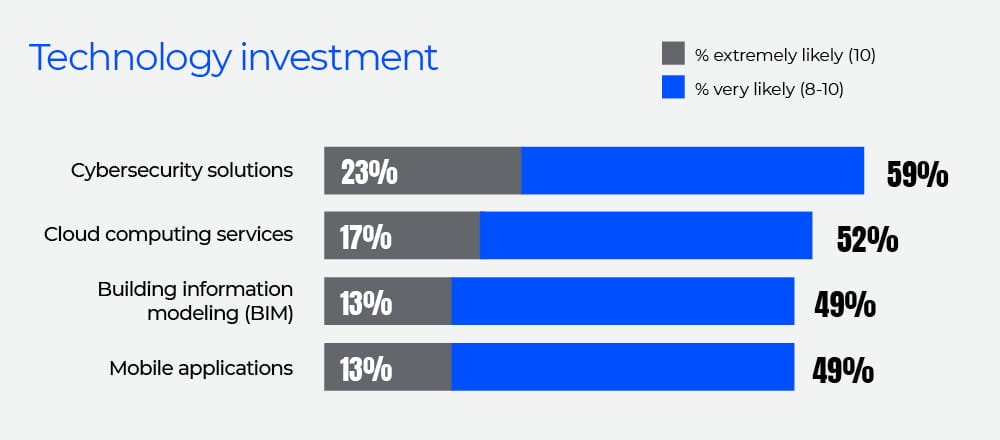
The top investment areas were cybersecurity, cloud computing, BIM and mobile applications.
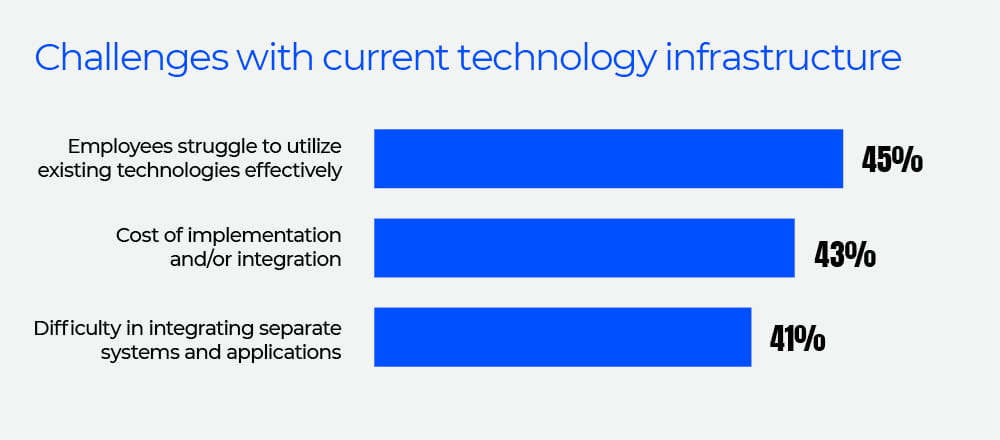
Employee struggles ranked as the top technology infrastructure challenge in 2026.
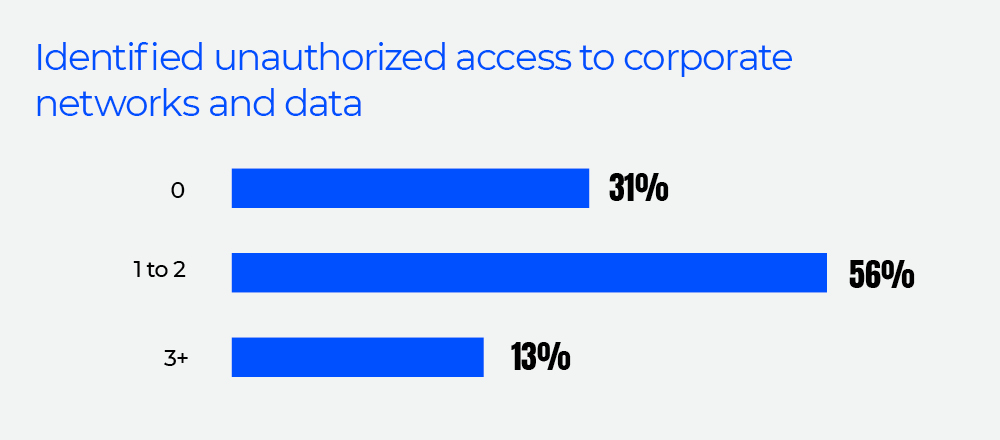
Sixty-nine percent of respondents said their firms experienced a cybersecurity incident in the past year.
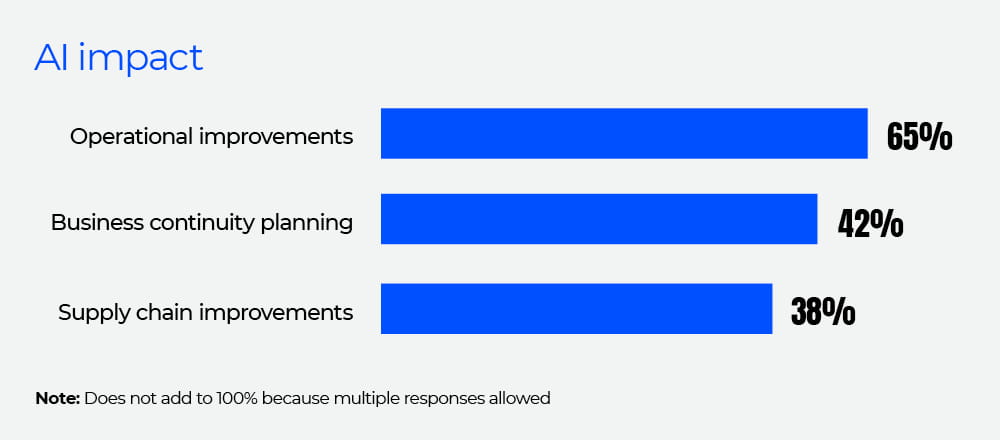
Operational improvements were the top-ranked impact from AI, followed by business continuity planning and supply chain improvements.
The full report also covers:
- Cybersecurity: Sixty-nine percent of executives said their firms experienced a cybersecurity incident in the past year. Executives also shared the top actions they are taking to strengthen cyber resilience.
- Data analytics: Forty-three percent of leaders said they leverage advanced analytics and machine learning for decision-making. However, only 18% reported achieving full automation.
- AI: Most organizations are in the early stages of AI adoption and only a small group is fully leveraging the technology. Sixty-five percent of executives reported operational improvements from AI.
- Next steps: Wipfli advisors provide context behind the numbers and practical guidance to help construction leaders maximize the value of their technology investments.
Download the full report for deeper analysis and all the data.
DOWNLOAD THE FULL REPORT